If Your Delivery Is Slow, You Are Already Losing.
Here is the uncomfortable truth about selling online in Nigeria in 2026. Your biggest competitor is not the brand with more followers, flashier ads, or louder campaigns. It is the brand that delivers faster and more reliably than you do.
Customers today are decisive. They compare options quickly, they read reviews carefully, and they abandon carts without hesitation. If your delivery feels uncertain or slow, they simply choose someone else. In this climate, logistics is the backbone of trust.
The New Expectations Nigerian Customers Have

The modern Nigerian buyer expects more than just a product. They expect speed, visibility, and convenience, and they expect all three without drama.
In 2026, your customers are looking for
- Faster dispatch and shorter delivery timelines
- Real time tracking without repeated follow ups
- Delivery coverage beyond major cities
- Minimal failed delivery attempts
- Clear, upfront pricing
Guess what? These expectations are not aspirational, they are standard. Sellers who fail to meet them are not just disappointing customers, but they are also quietly shrinking their own growth potential. These expectations have also significantly influenced logistics trends for 2026.
1. Faster Last-Mile Delivery
Delivery timelines now influence purchasing decisions directly. When customers see that an item can arrive within forty eight hours, they are more likely to complete their purchase. When delivery feels vague or extended, hesitation sets in.
Speed not only builds momentum. It encourages repeat purchases, strengthens reviews, and increases referrals. But speed does not happen accidentally. It requires structured processes and flexible courier options.
That is why many sellers are turning to centralized logistics platforms like Shipbubble, which allow businesses to access multiple delivery partners from a single dashboard. Instead of relying on one courier and hoping for the best, sellers can compare rates, choose the fastest option, and manage everything in one place. Efficiency becomes intentional rather than reactive.
2. Transparency is the New Customer Service
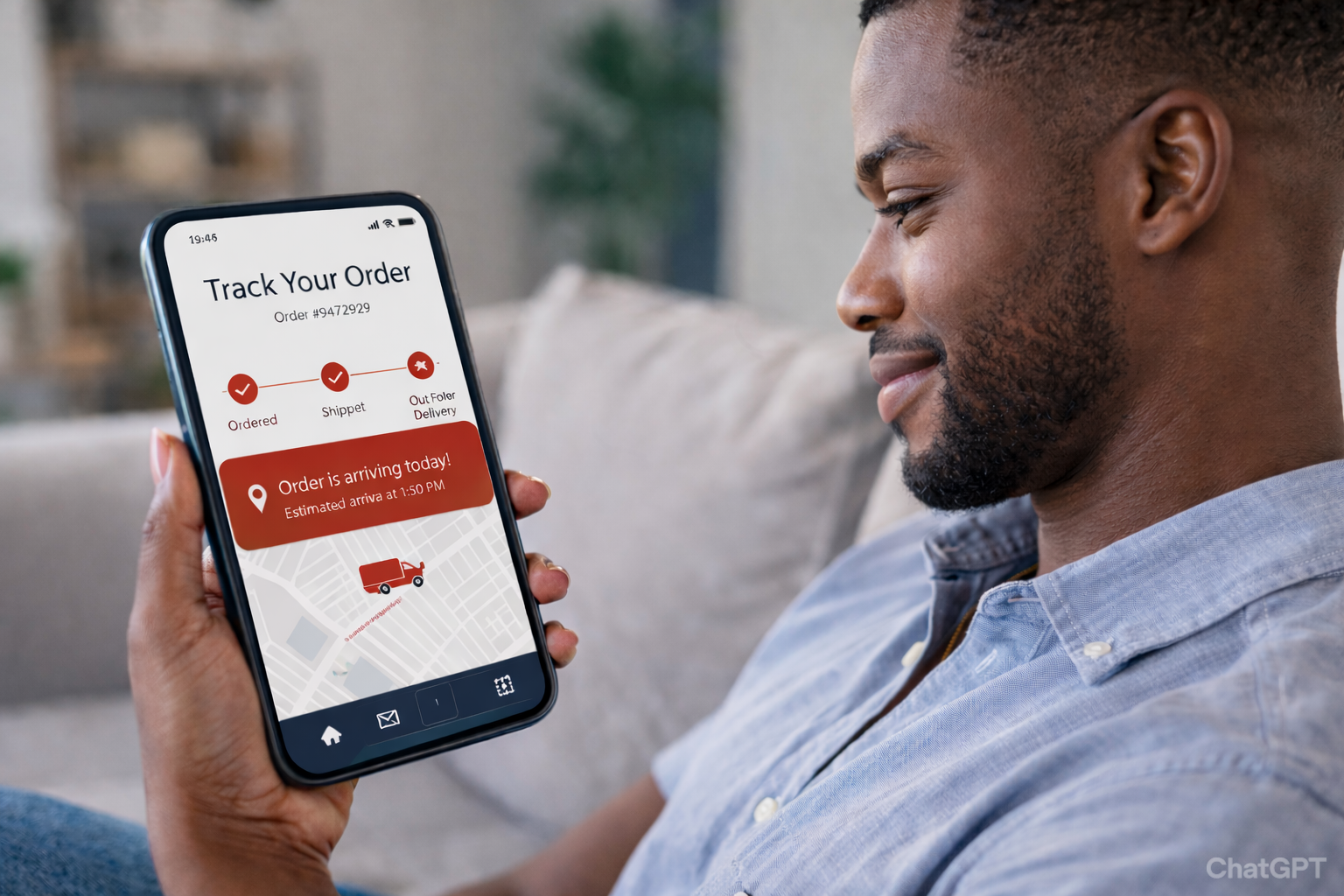
In 2026, buyers do not want to chase sellers for updates. They expect to track their orders seamlessly, and they expect accurate information at every stage of the delivery process.
When customers have visibility, support complaints decrease. Your team spends less time answering delivery questions and more time improving the business. Transparency improves customer experience, and it reduces operational strain.
But, how can you achieve this beyond juggling spreadsheets and phone calls?
The answer is simple. Systems. With integrated systems like Shipbubble, you automatically connect your order processing, tracking, and courier management seamlessly.
3. Expansion Beyond Major Cities
E-commerce growth is no longer concentrated in a single city. Orders are rising in secondary cities and emerging commercial hubs, and sellers who ignore this shift are leaving money on the table.
However, expansion introduces complexity. Delivery costs vary, timelines fluctuate, and reliability can differ across regions. To scale successfully, sellers need logistics infrastructure that supports nationwide reach without creating chaos.
With aggregated courier access through Shipbubble, businesses can serve customers across Nigeria while maintaining control over pricing and performance. This makes growth structured instead of stressful.
4. Systems Will Decide Who Scales and Who Stalls

As order volumes increase, weaknesses in logistics become impossible to hide. Manual coordination breaks down under pressure, delayed dispatch damages reputation, and inconsistent courier performance frustrates customers.
On the other hand, businesses with integrated systems operate differently. They process orders faster because inventory, payments, and delivery workflows are connected. They respond to issues quicker because tracking and communication are centralized. They scale more confidently because their operations are built to handle growth.
In 2026, Nigerian e-commerce is not slowing down. Customers are buying more frequently, expecting more consistency, and rewarding brands that deliver without excuses.
The real question is not whether the market will grow. It will. The real question is whether your logistics system is strong enough to grow with it.
These Delivery Trends Are Shaping the Future of Nigerian E-commerce
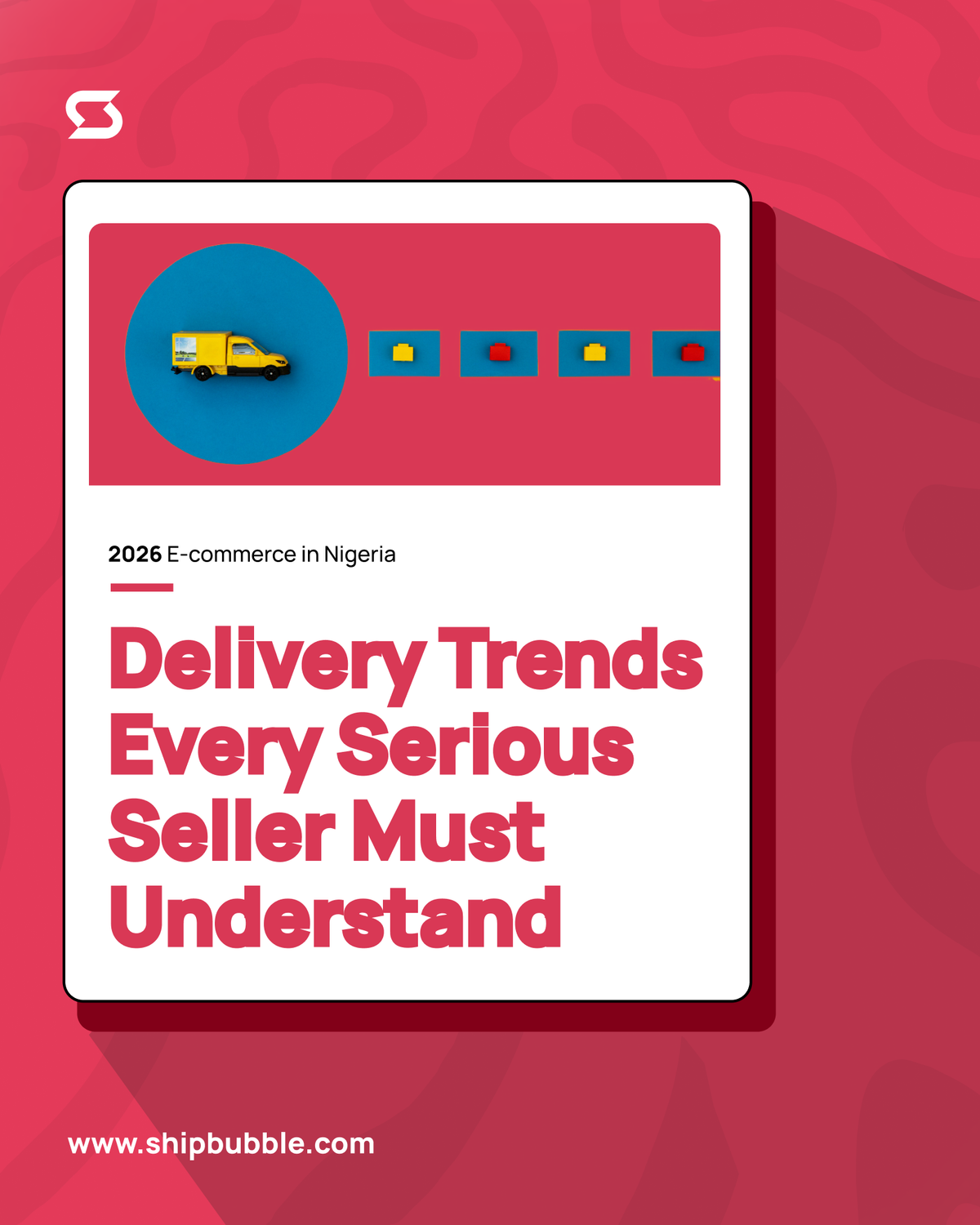
If you want to succeed in Nigeria’s e-commerce ecosystem in 2026, you must understand the delivery trends.
Customers are impatient, informed, and unforgiving of poor communication. Delivery expectations are rising fast across cities big and small. Payment behavior is shifting toward prepaid options that streamline fulfillment. Returns and tracking are part of purchase decisions, not add-ons.
And sellers who embrace structured delivery systems and flexible logistics networks will not just survive, they will grow.
Because in 2026, the store that delivers best wins the customer for life.
Shipbubble is here to help you navigate the complexities, uncertainties, and changes the logistics landscape is facing. With our logistics solution, you are able to leverage these trends excellently, and grow your business in 2026 and beyond.
Register on Shipbubble to get started today