
If you plan on growing your business in 2026, you cannot rely on effort alone.
The businesses gaining market share today are not simply working harder; they are operating with stronger systems, smarter infrastructure, and tools that create leverage across every stage of the customer journey. Growth in this environment demands structure, visibility, automation, and most importantly, operational reliability.
Search trends this year reflect a clear shift. Business owners are actively looking for AI automation tools, CRM software for small businesses, cloud accounting platforms, business intelligence systems, and ecommerce logistics solutions because they understand that scaling without infrastructure leads to burnout, operational breakdown, and shrinking margins. The right tools do not just support growth; they make growth sustainable.
Here are the five essential tools every serious business owner should prioritize in 2026, and why logistics may be the most powerful of them all.
1. AI Powered Automation Platforms
Artificial intelligence has moved beyond experimentation and into daily operations. Modern automation platforms now manage customer inquiries, trigger workflow sequences, qualify leads, organize internal processes, and even generate performance insights in real time. By reducing repetitive manual work, these systems free up your team to focus on strategy, partnerships, and revenue generating activities.

More importantly, automation improves response speed and consistency, both of which directly impact customer satisfaction and conversion rates. However, automation must connect seamlessly to your operational backend. If your marketing and sales processes are optimized but fulfillment remains inefficient, customer experience will eventually suffer. For this reason, automation should be viewed as the front layer of a well connected operational system rather than a standalone solution.
2. A Robust Customer Relationship Management System
Traffic without structure rarely converts at its highest potential. A well implemented CRM gives you visibility into your entire sales pipeline, allowing you to track leads from first interaction to final purchase while automating follow ups and segmenting customers intelligently. In a market where personalization drives engagement, understanding your customers’ behaviors, preferences, and buying cycles is no longer optional.
Beyond increasing conversion rates, a CRM also strengthens retention by ensuring that communication remains timely and relevant. Yet even the most advanced CRM cannot compensate for delivery failures. When a customer places an order, expectations immediately shift from persuasion to performance. That transition must feel seamless if trust is to be preserved.
3. Cloud Accounting and Financial Intelligence Tools
Financial clarity has become a strategic advantage in 2026. Cloud based accounting platforms and real time financial dashboards allow business owners to monitor revenue, expenses, profit margins, and cash flow with precision. Instead of reacting to problems months later, you gain the ability to anticipate challenges and adjust proactively.
One area that often becomes clearer through financial visibility is logistics cost management. Shipping expenses, failed deliveries, return handling, and courier inefficiencies can quietly erode margins without obvious warning signs. As order volume increases, even minor inefficiencies compound significantly. Therefore, financial intelligence must extend beyond sales figures to include fulfillment performance and cost control.
4. Data Analytics and Business Intelligence Platforms
While accounting tools tell you what has happened, analytics platforms help you understand why it happened and what may happen next. Business intelligence software integrates data from marketing campaigns, sales channels, customer behavior, and operational metrics into unified dashboards that guide strategic decision making.
With proper analytics, you can identify demand patterns, forecast inventory needs, optimize pricing strategies, and refine acquisition efforts. However, insights alone do not resolve operational bottlenecks. If data reveals rising demand but your delivery infrastructure cannot keep pace, customer dissatisfaction will quickly follow. Analytics informs direction, but infrastructure sustains execution.
5. Logistics Infrastructure as a Core Growth Tool
This is where many growing businesses underestimate their leverage. Logistics is no longer a background function handled after a sale is made; it is a central component of brand perception, customer loyalty, and long term profitability. In 2026, customers expect transparent tracking, competitive shipping rates, reliable nationwide coverage, and timely delivery without friction.
When logistics performs poorly, acquisition costs increase because dissatisfied customers do not return, reviews decline, and operational stress intensifies. Conversely, when logistics operates efficiently, it enhances trust, improves repeat purchase rates, and stabilizes margins.
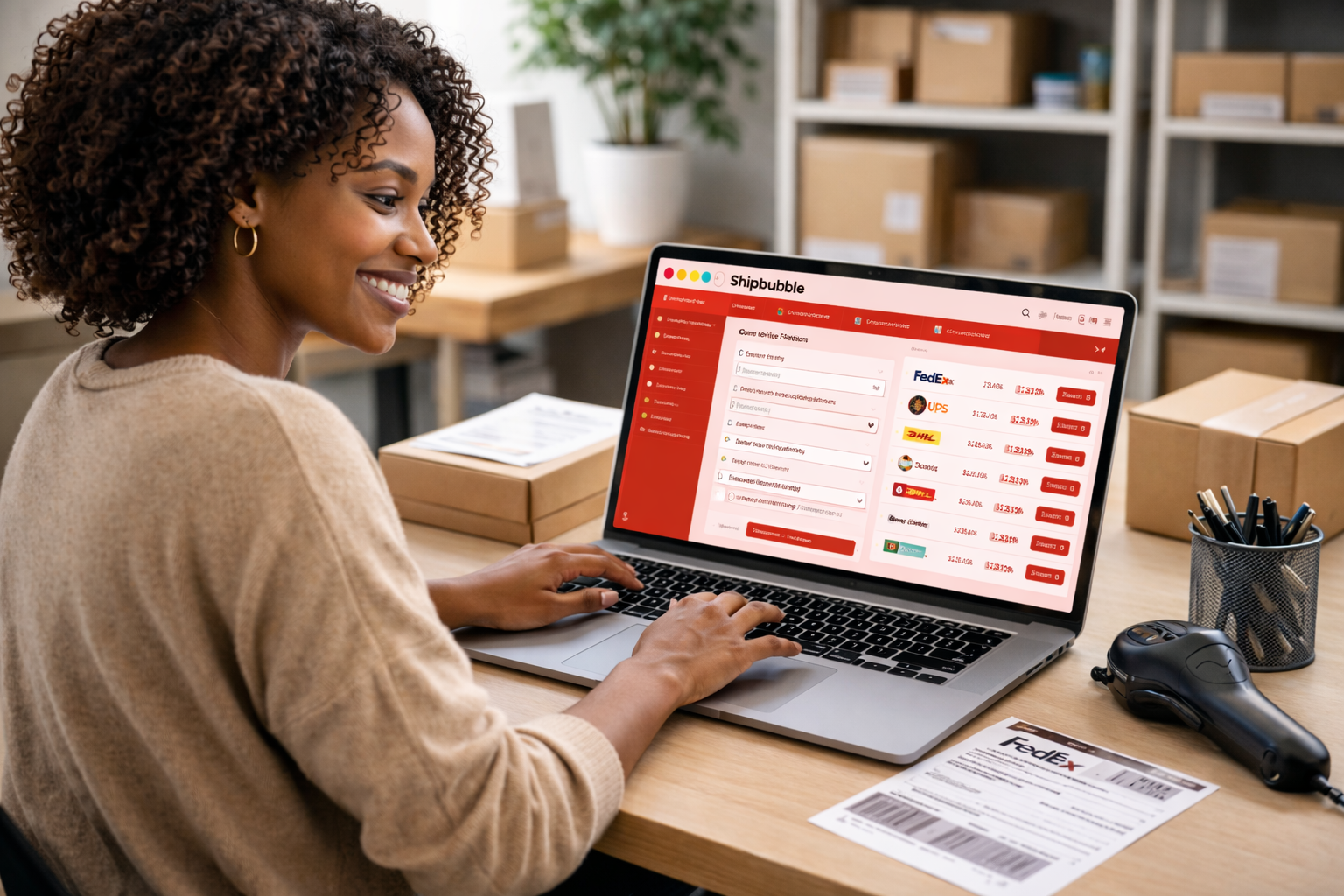
For ecommerce and product based businesses in particular, platforms like Shipbubble provide structured logistics infrastructure rather than fragmented courier coordination. By centralizing multiple courier options, enabling automated rate comparisons, streamlining shipment management, and offering real time tracking from a unified dashboard, Shipbubble transforms delivery from a reactive task into a managed growth system.
Instead of negotiating individually with different delivery partners or manually calculating shipping costs, business owners gain operational visibility and control. This not only reduces errors and inefficiencies but also strengthens the entire customer experience from checkout to doorstep.
Why These Tools Must Work Together
Each of these tools serves a distinct purpose. Automation increases efficiency, CRM systems strengthen relationships, financial dashboards protect margins, analytics guides strategy, and logistics ensures that promises made during marketing are fulfilled consistently. When integrated thoughtfully, they form a cohesive growth engine rather than disconnected software subscriptions.
If your objective in 2026 is not simply to grow revenue but to build a resilient, scalable business, then logistics should sit at the heart of your technology stack. Marketing attracts customers, sales converts them, but reliable fulfillment secures their loyalty and protects your profitability.
The businesses that dominate this decade will not be those with the loudest campaigns, but those with the strongest infrastructure. And in today’s market, logistics powered by systems like Shipbubble is no longer optional support. It is your strategic advantage.