Nigeria’s logistics industry is no longer “developing.” It is expanding under pressure. E-commerce is growing, social commerce is driving daily orders through Instagram and WhatsApp and SMEs are shipping interstate and globally.
But growth is exposing the cracks.
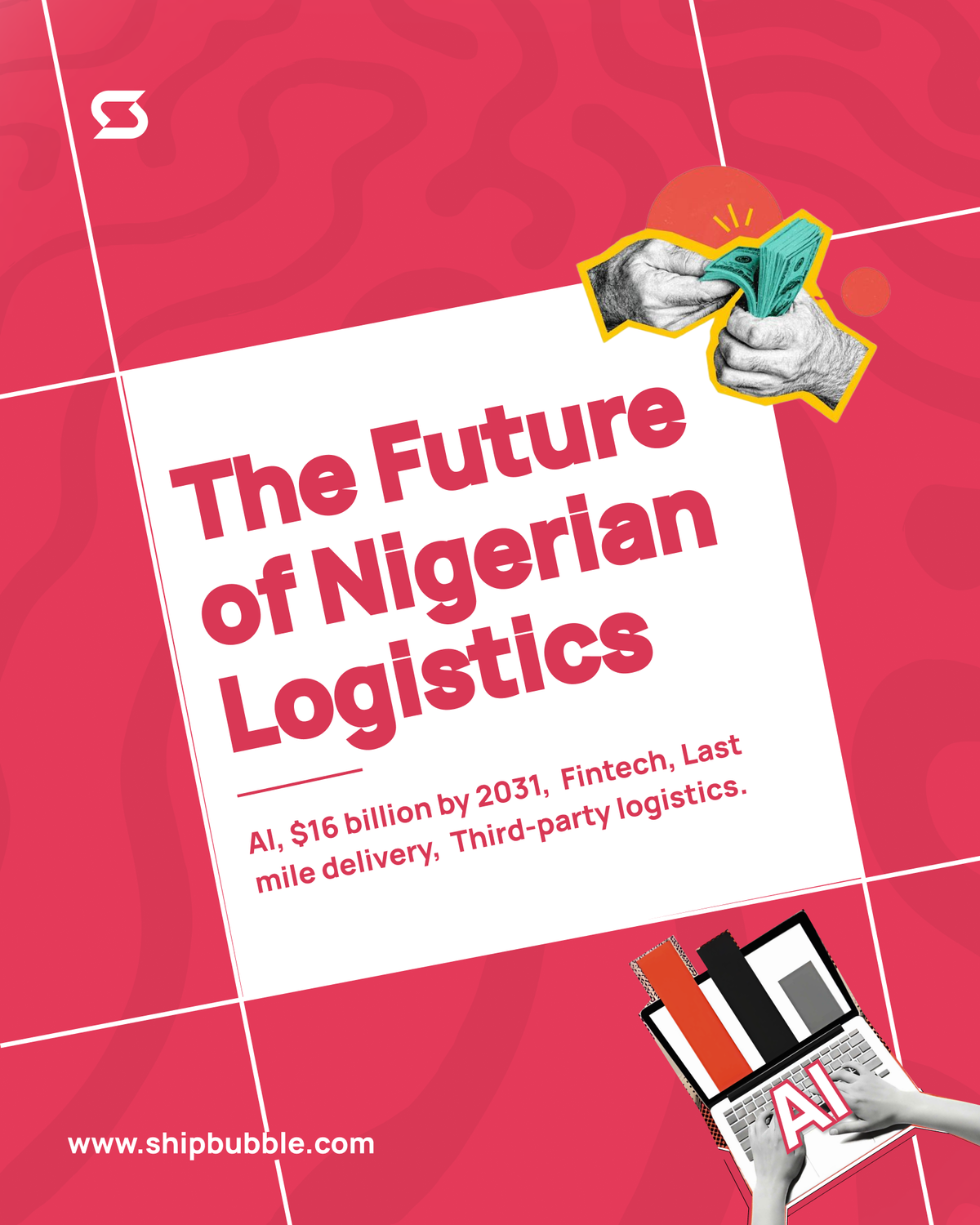
There are operational challenges such as traffic congestion, poor addressing systems, fuel volatility, delayed remittances, unreliable courier coverage and many more. Despite these challenges, Nigeria’s logistics sector is projected to hit $16 billion by 2031 (according to Mordor Intelligence).
That projection will only hold if systems improve.
Here’s what will shape the future.
AI: Smarter Systems (not buzzwords)

In the Nigerian context, AI simply means fewer manual decisions and fewer costly mistakes.
If your orders grow from 50 per day to 500 per day, you cannot manage dispatch the same way. Manual coordination will break and delays increase. All of these will consequently lead to customer complaints rising.
The future belongs to logistics systems that remove guesswork. Instead of relying on one courier company and hoping they perform, businesses are connecting to multiple courier partners through centralized platforms and letting performance data guide allocation.
In Nigeria, efficiency is not optional. It directly affects margins.
$16 Billion by 2031: The Real Implication
A $16 billion logistics market is not just a headline figure. It reflects structural change.
Look at growing brands across beauty, fashion, and wellness. As they scale from 100 monthly orders to thousands, logistics becomes the backbone of their operations. Spreadsheets and manual tracking stop working very quickly.
The revenue growth will favor platforms and providers that make scaling seamless. Not necessarily the loudest brands, but the most reliable systems.
Fintech: The Quiet Enabler
Logistics in Nigeria is deeply connected to payments. Cash on delivery is still common. Remittance cycles can be slow. Reconciliation can become complicated.
This is where fintech integration changes everything.
When payment systems are embedded into logistics platforms, businesses receive faster settlements. Riders handle less physical cash. Reconciliation becomes automated instead of manual, then transparency increases across the board.
Without fintech integration, logistics remains fragmented. With it, the ecosystem becomes more stable and scalable.
The future of logistics and fintech in Nigeria will be closely linked.
Last Mile Delivery: The Pressure Point

Last mile delivery is where most breakdowns happen.
In Lagos, it means navigating traffic and gated estates. In Abuja, it can mean unclear directions inside large residential areas. In other states, it may involve longer distances and limited courier coverage.
Customers, however, do not adjust their expectations based on these realities.
So the solution is not working harder. It is building smarter networks like zone-based dispatching, real-time tracking, courier performance data, and multi-courier flexibility. Businesses can no longer afford to depend on a single rider or a single courier provider.
Flexibility is now a competitive advantage.
Third-Party Delivery: Scaling Without Heavy Overhead
Many businesses consider building their own delivery fleet. At first glance, it offers control. But fleet maintenance, rider management, fuel costs, and limited geographic reach quickly become expensive distractions.
Third-party logistics allows businesses to focus on product development, marketing, and customer experience while leveraging established delivery networks.
However, the real advantage lies in aggregation, not choosing one courier, but accessing multiple through one system. That flexibility allows businesses to adjust based on performance, pricing, and coverage without operational disruption.
That is what scalable logistics will look like in the future.
Where Shipbubble Comes In
If Nigerian logistics is moving toward centralized systems, multi-courier access, smarter allocation, and embedded payments, then businesses need infrastructure that supports that shift.
Shipbubble enables businesses to connect to multiple courier partners from a single dashboard. Instead of switching platforms when one courier underperforms, businesses can allocate orders intelligently without disrupting operations.
It centralizes order management, fulfillment tracking, and courier coordination. As order volume increases, automation reduces manual intervention. Performance tracking helps businesses identify delivery gaps and make data-backed decisions.
For scaling brands, this is not just convenience. It is operational stability.
The Bottom Line
Nigeria’s logistics industry will continue growing. The $16 billion projection by 2031 reflects increasing demand and digital adoption across sectors. The real question is not whether the industry will grow. It is whether businesses are building systems that can handle that growth.
Manual coordination will not survive scale. Single-courier dependency will create bottlenecks. Poor payment reconciliation will slow cash flow. Businesses that invest in structured, multi-courier, tech-enabled logistics infrastructure now will move faster and grow more sustainably.
If you are building a serious e-commerce or direct-to-consumer brand in Nigeria, logistics cannot remain an afterthought.
Strengthen your backbone early. Register on Shipbubble today.