As your online business grows, automating shipping is non-negotiable.
Many Nigerian businesses still manage deliveries manually. They calculate shipping fees themselves, contact dispatch riders one by one, update customers on WhatsApp, and track deliveries across different courier platforms.
This approach may work when you're processing a few orders a week. Once sales increase, it becomes difficult to maintain speed, accuracy, and a good customer experience.
This is where shipping automation comes in.
If you're wondering how to automate delivery in Nigeria, this guide explains the process and how shipping software can help you manage deliveries more efficiently.
What Is Shipping Automation?
Shipping automation is the use of software to manage delivery tasks that would otherwise be handled manually.
Instead of creating shipments, tracking deliveries, and communicating with multiple courier companies individually, businesses can manage everything from a single platform.
Tasks that can be automated include:
- Shipment creation
- Courier selection
- Delivery tracking
- Customer notifications
- Order management
- Shipping reports
The result is a faster and more organized fulfillment process.
Why Businesses Are Automating Deliveries
The average online business spends a significant amount of time coordinating deliveries.
For every order, someone has to collect delivery information, find a courier, confirm pricing, monitor progress, and respond to customer inquiries.
As order volume increases, these tasks consume valuable time that could be spent on marketing, customer acquisition, and business growth.
Automation reduces repetitive work and helps businesses manage larger order volumes without increasing operational complexity.
Step 1: Use A Shipping Software Built for Nigerian Businesses
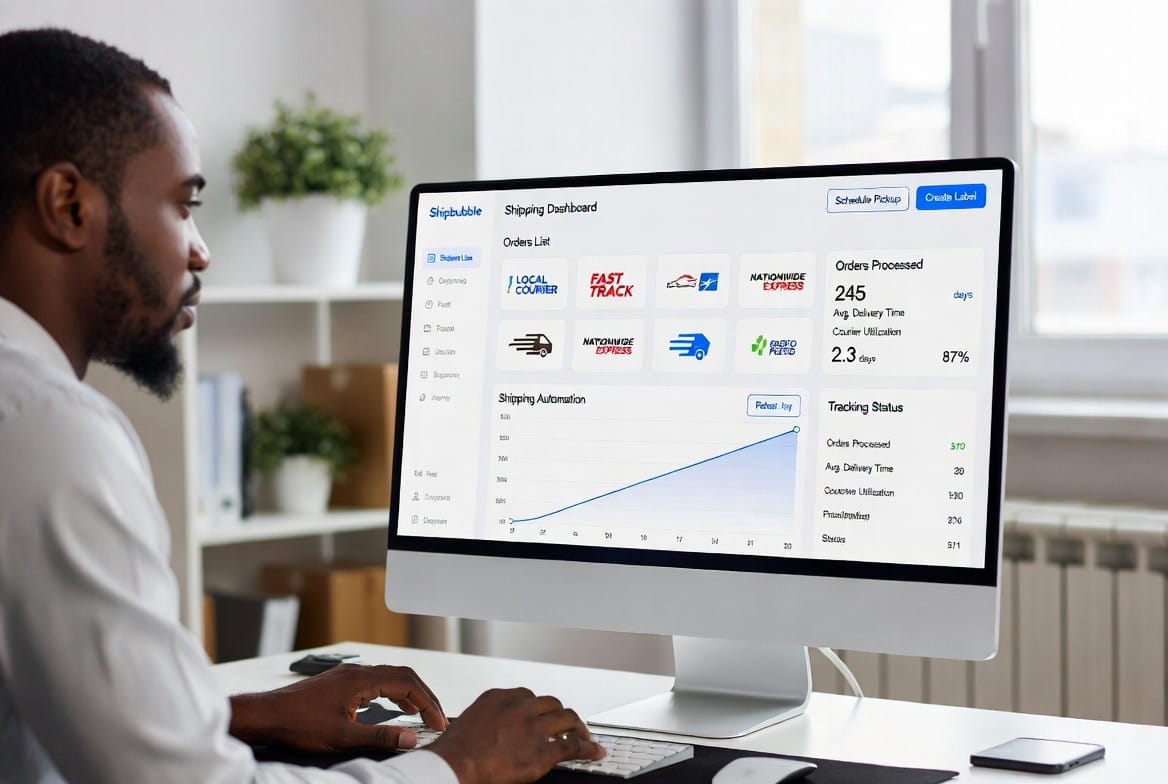
The first step is choosing a shipping platform that connects you with multiple courier providers.
Instead of working with several courier companies separately, shipping software allows you to access them through a single dashboard.
This gives you one place to create shipments, compare delivery options, track orders, and manage fulfillment.
For businesses delivering across Lagos, Abuja, Port Harcourt, Ibadan, Kano, and other locations, this creates a more efficient workflow.
Step 2: Connect Your Sales Channels
Shipping automation works across different types of online businesses.
Bumpa Stores
If you use a Bumpa website, you can easily integrate Shipbubble on it to automate your deliveries seamlessly.
Shopify Stores
Shopify merchants can also connect their stores and sync orders automatically. Once a customer places an order, the information is available for fulfillment without manual entry.
WordPress and WooCommerce Stores
Businesses using WordPress and WooCommerce can also automate shipping by connecting their stores to a shipping platform.
Orders can be imported directly, making it easier to create shipments and track deliveries.
Social Media Sellers
Many Nigerian businesses sell primarily through Instagram, WhatsApp, Facebook, or TikTok.
Even without a traditional ecommerce website, shipping software can help automate delivery operations.
Instead of coordinating each order manually, sellers can manage shipments and tracking information from one dashboard.
Step 3: Automate Shipment Creation
Manual data entry often leads to delays and mistakes.
When shipping software is connected to your store, customer information and order details can be pulled directly into the system.
This reduces administrative work and helps ensure delivery information is accurate from the start.
Step 4: Give Customers Access to Tracking Information

One of the most common questions online businesses receive is, "Where is my order?"
Automated tracking helps answer that question without requiring constant follow-up.
Customers can receive updates as their orders move through the delivery process, giving them greater visibility and confidence in your service.
For businesses, this often means fewer support requests and a better customer experience.
Step 5: Compare Courier Options in One Place
Different deliveries have different requirements.
Some customers want the fastest option available. Others prioritize affordability.
Shipping software allows businesses to compare courier services and select the option that best fits each order.
This helps merchants make informed decisions without checking multiple courier platforms individually.
Step 6: Manage Growth More Efficiently
The biggest advantage of delivery automation is that it allows businesses to handle more orders without creating more manual work.
Whether you're processing 10 orders a week or hundreds each month, automation helps maintain consistency across your fulfillment process.
It becomes easier to track performance, monitor deliveries, and maintain service quality as the business grows.
Who Should Automate Shipping?
Shipping automation is useful for:
- Bumpa stores
- Shopify stores
- WordPress and WooCommerce stores
- Instagram businesses
- Whatsapp businesses
- Fashion brands
- Beauty and skincare businesses
- Electronics stores
- Marketplace sellers
- Small and medium-sized ecommerce businesses
Any business that regularly coordinates deliveries can benefit from a more streamlined process.
Automate Shipping with Shipbubble
Managing deliveries manually may be manageable at the beginning, but it often becomes a challenge as order volume increases.
Shipbubble helps businesses automate shipping by connecting them to multiple courier partners, providing real-time tracking, simplifying fulfillment, and centralizing delivery management in one platform.
Whether you sell through Instagram, Shopify, Bumpa, WordPress, WooCommerce, or multiple channels, Shipbubble makes it easier to manage deliveries from a single dashboard.
Start your free Shipbubble trial today and see how shipping automation can simplify your fulfillment process.